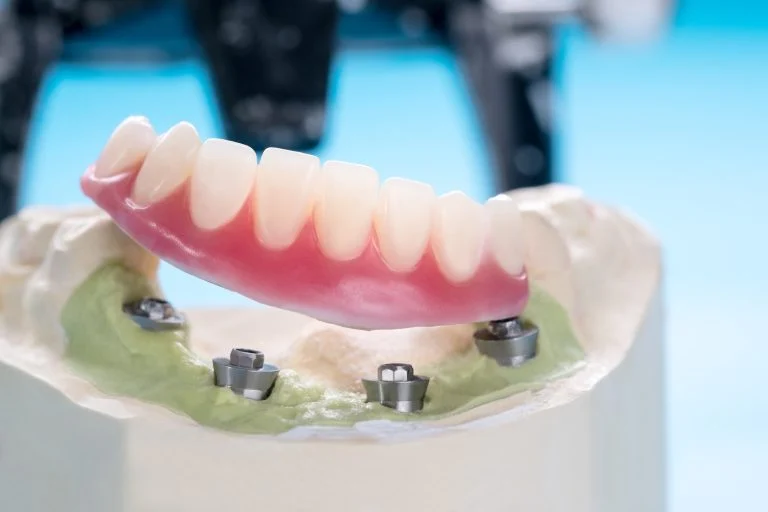

Missing teeth push a lot of people toward implant treatment, and then the same worry shows up: what will the appointment feel like? If needles, drilling sounds, or the phrase “oral surgery” make your stomach drop, you are in good company. Dental anxiety and dental phobia are common reasons people put off tooth replacement for years.
Here is what may surprise you. Most people do not need to be fully asleep because local anesthetic controls pain, while sedation for dental implants helps reduce fear and awareness. Understanding the different roles of anesthesia and sedation can make your treatment choices feel clearer.
You have real choices, from a light dose of laughing gas to IV sedation that leaves you with little memory of the visit. What fits you depends on your anxiety level, your health history, how long the appointment will run, and who will drive you home.
Key Takeaways
- Local anesthetic controls surgical pain; sedation handles fear, awareness, and memory.
- Nitrous oxide, oral sedation, and IV sedation offer increasing depth, with general anesthesia reserved for select cases.
- Your health history, medications, procedure length, and ride home all shape the safest plan for you.
Do You Need Sedation for Dental Implants?
You do not have to have sedation for dental implants. Plenty of single-implant appointments go smoothly with local anesthesia alone, and sedation becomes a helpful add-on when anxiety, a sensitive gag reflex, or a longer surgical plan enter the picture.
When Local Anesthesia Alone Is Often Enough
A single implant placed in healthy bone is a fairly contained procedure. The site gets numbed with local anesthetic, the implant goes in, and many people are surprised at how little they feel.
If you sit through fillings without much trouble, local anesthesia may be all you want. The pressure and vibration are noticeable, but sharp pain is blocked by the numbing medication.
When Anxiety or Procedure Complexity May Call for More Support
Sedation earns its place when the appointment is long, when several implants are planned, or when your body reacts to dental settings before anything even starts.
It is worth discussing sedation if any of these apply to you:
- You have a low pain tolerance or a history of numbing not working well for you
- You have a strong gag reflex that makes back-of-mouth work hard to tolerate
- You cancel or avoid appointments because of fear
- Past dental experiences left you tense or upset
- Your plan includes bone grafting, a sinus lift, or multiple implants in one visit
- Holding your mouth open for a long stretch is physically difficult
Sedation Helps You Relax, While Local Anesthetic Controls Pain
Sedation does not numb you. Local anesthesia is the baseline for every dental implant procedure, and sedation sits on top of it.
Even under deep sedation, your care team still numbs the surgical site. Sedation lowers your awareness so time passes quickly; the anesthetic is what keeps you from feeling the work. Both are part of the dental implant services discussion at your consultation.
Which Sedation Option Fits Your Implant Procedure?
Four levels come up most often in implant dentistry: local anesthesia by itself, nitrous oxide, oral sedation, and IV sedation. They differ in how deeply you relax, how much you remember, and how long you need to recover afterward.
| Nitrous Oxide | Oral Sedation | IV Sedation | General Anesthesia | |
|---|---|---|---|---|
| Depth | Mild | Mild to moderate | Moderate (conscious) | Unconscious |
| How it is given | Inhaled through a nose mask | Pill taken before the visit | Through a vein in the arm | IV, hospital or surgical setting |
| Memory of visit | Full | Hazy | Little to none | None |
| Wears off | Minutes | Hours | Hours, with grogginess | Hours, longer recovery |
| Ride home needed | Follow the provider’s instructions | Yes | Yes | Yes |
Nitrous Oxide for Mild, Short-Acting Relaxation
Nitrous oxide, better known as laughing gas, flows through a small nose mask and takes effect within a few minutes. You stay awake and can answer questions, but the edge comes off quickly.
Nitrous oxide usually wears off quickly, but patients should follow their provider’s instructions about driving and returning to normal activities.
Oral Sedation for a Calmer, Hazy Experience
Oral sedation involves a prescription medication taken before treatment. The medication and timing depend on the patient’s health and the provider’s protocol.
That partial amnesia is exactly what some anxious patients want. You will need a ride, and the sleepiness can linger for the rest of the day.
IV Sedation for Dental Implants and Longer Procedures
IV sedation delivers medication straight into a vein, which lets your provider adjust the depth minute by minute. This is what people mean by conscious or moderate sedation, sometimes called twilight sleep.
You are still able to respond, yet many patients barely remember the procedure afterward. It is a strong fit for multiple implants, grafting, or full-arch work where the appointment runs long.
When General Anesthesia May Be Considered
General anesthesia may be considered in limited situations based on the patient’s medical needs, ability to tolerate treatment, procedure complexity, and the qualifications and facility available. It is not routinely required for dental implant placement.
What Determines the Safest Level of Sedation?
The safest level of dental sedation for you comes out of a conversation, not a menu. Your provider weighs your medical history, your medications, the length and scope of the surgery, and the monitoring available in the office.
Your Medical History and Current Medications
Bring a full list of medications and supplements to your consultation, including anything you take occasionally.
Blood thinners, sleep aids, pain medications, supplements, and other substances may affect treatment or sedation planning. Do not stop or change any medication unless instructed by the prescribing healthcare professional.
Certain conditions call for extra planning. Dentists flag cardiovascular disease, sleep apnea, and diabetes as histories that complicate sedation planning, along with any past reaction to local anesthesia or sedatives. Sleep apnea deserves special mention, since sedation relaxes the airway muscles that already give you trouble at night.
Treatment Length, Bone Grafting, and Number of Implants
Treatment time varies based on the implant location, number of implants, bone condition, and whether additional procedures are required.
Longer appointments push the conversation toward IV sedation, partly for your comfort and partly because staying still matters for accurate implant placement. Ask for a realistic time estimate before you choose.
Why Monitoring and Provider Training Matter
Sedation requirements vary by state and depth of sedation. Ask who will administer the medication, what training they have, and how you will be monitored.
For complex implant dentistry, an oral and maxillofacial surgery background or a dental anesthesiologist working alongside your implant surgeon adds a layer of safety.
What to Expect Before, During, and After Implant Surgery
Implant surgery day follows a predictable rhythm: paperwork and consent, numbing, sedation if you chose it, placement, then supervised recovery. Knowing the order of events takes a surprising amount of pressure off.
Preparing for Your Appointment and Arranging a Ride
You will get written instructions covering fasting, which medications to take, and what time to arrive. If fasting is required for your planned sedation, follow the written instructions carefully. Requirements differ by sedation type and individual health needs.
Practical prep helps more than people expect:
- Arrange a driver for anything beyond nitrous oxide, and plan for them to wait
- Wear short sleeves and skip contact lenses if you are having IV sedation
- Fill prescriptions and stock soft foods the day before
- Complete your patient forms ahead of time so check-in is quick
How Comfort Is Managed During Implant Placement
Local anesthesia goes in first, and your provider tests the area before starting. If you feel anything sharp, say so; more anesthetic can be added.
With IV sedation, the medication is titrated until you are relaxed, then adjusted as needed. Nitrous levels can be dialed up or down mid-appointment too. You can agree on a hand signal beforehand if talking feels hard.
Recovery Expectations After Sedation
Nitrous oxide clears in minutes. After oral or IV sedation, expect grogginess for several hours and plan a quiet day at home with no driving, no work decisions, and no alcohol.
Swelling and soreness peak around day two or three and respond to ice and prescribed medication. Your post-op instructions cover rinsing, eating, and when to call, and unexpected pain or bleeding is worth a call to emergency care instead of waiting it out.
A Personalized Comfort Plan Can Make Treatment Feel Manageable
Fear of the dental implant procedure keeps a lot of people from replacing teeth they miss every day. Once you know that local anesthetic handles the pain and sedation options exist purely to help with dental anxiety, the appointment stops feeling like a leap.
Your plan should reflect your history, your comfort level, and the length of your implant placement, not a one-size-fits-all protocol. That might mean nitrous oxide for a single implant or IV sedation for a longer surgical visit.
Bring your worries to the consultation, even the ones that feel silly to say out loud. A conversation with Ridge Road Family Dentistry can start with your questions about comfort before anything about treatment gets scheduled, and current implant offers are worth asking about at the same visit.
Frequently Asked Questions
What type of sedation is used for dental implants?
Local anesthesia is used in every case, and it may be paired with nitrous oxide, oral sedation, or IV sedation depending on your anxiety and the length of surgery. General anesthesia is reserved for select complex cases. Your provider will recommend a level based on your health history and treatment plan.
Is it best to be sedated for dental implants?
Sedation is helpful, not required. Many people do fine with local anesthesia alone for a single implant, while sedation for dental implants makes a real difference for anxious patients, strong gag reflexes, and long multi-implant appointments.
How painful is getting a dental implant?
During surgery, the site is numb, so you feel pressure and vibration more than pain. Afterward, most patients describe soreness similar to a tooth extraction, managed with ice and the medication your provider recommends. Discomfort usually peaks two to three days out.
How long does a dental implant procedure take?
A single implant placement often takes about an hour or less. Multiple implants, bone grafting, or full-arch cases can run several hours, which is one reason IV sedation for dental implants comes up more often with those plans.
Can I get a dental implant with local anesthesia only?
Yes. Local anesthesia alone is a common and appropriate choice for straightforward single-implant surgery, and it lets you drive yourself home. Tell your provider if you have had trouble getting fully numb in the past.
Do I need someone to drive me home after sedation for dental implants?
Yes for oral sedation, IV sedation, and general anesthesia. Nitrous oxide is the exception, since it clears within minutes and most patients drive themselves. Arrange your ride when you book, and expect your driver to stay through recovery.