Losing most of your teeth changes daily life in ways that go beyond your smile. Chewing gets harder, speech can feel different, and confidence takes a hit when you’re worried about slipping or clicking.
If you’re comparing All-on-4 vs. traditional dentures, the choice comes down to one core question: do you want a fixed set of teeth anchored to implants, or a removable option that rests on your gums?
Both All-on-4 vs traditional dentures can restore your ability to eat, talk, and smile with less worry. The right answer depends on your bone health, your budget, your comfort with surgery, and how much daily upkeep you’re willing to take on. Neither option is wrong, and plenty of people live full, happy lives with either one.
This decision affects your oral health and quality of life for years, so it’s worth understanding what each path actually involves before you sit down for a consultation.
Key Takeaways
- All-on-4 uses implants fixed to your jawbone, while traditional dentures are removable and rest on your gums.
- Your bone health, healing capacity, and any health conditions play a big role in which option fits you best.
- Cost, care routines, and long-term maintenance look very different between the two, so it helps to compare both before deciding.
What Is the Difference Between Fixed All-on-4 and Removable Dentures?
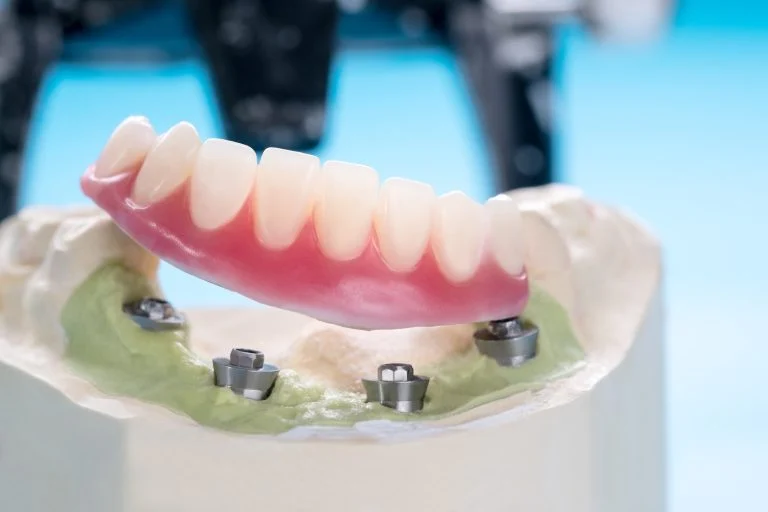
All-on-4 uses a full-arch restoration secured to implants in the jawbone. Patients do not remove it for routine cleaning, although a dentist may remove it when professional maintenance or repairs are needed.
That single distinction shapes nearly everything else, including stability, bone health, and how much daily care each option needs.
How Traditional Dentures Replace Missing Teeth
Traditional dentures replace a full arch of missing teeth (or a partial arch, if some natural teeth remain) with a removable appliance custom-made to fit your gums. Complete dentures replace an entire arch, while partial dentures fill in gaps around remaining natural teeth.
Immediate dentures can be placed the same day as tooth extractions, giving you teeth to wear while your gums heal. Dentures come out at night and need daily cleaning, and because they sit on top of the gums rather than being anchored to the bone, they rely on suction or adhesive to stay in place.
How All-on-4 Supports a Full Arch of Replacement Teeth
These dental implants use four titanium implants, strategically placed in the jawbone, to support a full arch of fixed replacement teeth. Two implants go in toward the front of the jaw, and two are angled toward the back to reach denser bone, which helps this implant-supported solution work even in patients with some bone loss.
Because the prosthesis attaches directly to titanium implants, it functions much closer to natural teeth. You brush it in place, and it doesn’t come out for cleaning.
How Do All-on-4 and Dentures Feel in Daily Life?
All-on-4 feels closer to natural teeth in daily use, while traditional dentures require more adjustment to speaking and eating with a removable appliance. The difference shows up most in stability, chewing ability, and how confident you feel in social situations.
Stability, Speech, and Comfort During Daily Activities
A fixed prosthesis doesn’t shift when you talk or laugh. Traditional dentures can click, slip, or loosen during the day, especially if the fit has changed due to gum or bone changes over time.
Denture wear often means reapplying adhesive throughout the day or avoiding certain movements, like wide smiles or vigorous chewing, out of concern the denture might shift. All-on-4 patients need a few weeks to adjust to the feel of a fixed arch after surgery, but once healed, they are far more stable and predictable.
Chewing Ability, Food Choices, and Confidence
Chewing function tends to improve significantly with a fixed, implant-anchored arch. Because All-on-4 doesn’t rely on suction or gum contact the way dentures do, it can handle a wider range of foods, including some that denture wearers often avoid, like corn on the cob or tough meats.
Switching to a fixed solution can restore some of that lost dietary freedom once healing is complete, which has a real effect on quality of life, not just comfort at mealtime.
How Does Each Option Affect Jawbone Health?
Traditional dentures don’t stimulate the jawbone, so bone loss tends to continue after you start wearing them. All-on-4 implants integrate with the bone itself, which helps preserve the bone volume you have left.
Why Missing Natural Tooth Roots Can Lead to Bone Loss
Your jawbone stays healthy partly because of the pressure and stimulation it gets from natural tooth roots every time you bite or chew. Once those roots are gone, that stimulation stops, and the bone in that area starts to shrink over time.
This is one reason dentures often need relining or replacing over the years. As jawbone shrinkage continues, the shape of your gums changes, and a denture that fit well at first can start to feel loose or unstable.
How Implant Integration Helps Preserve Available Bone
Titanium implants placed during All-on-4 surgery go through a process called osseointegration, where the bone fuses directly to the implant surface. Once integrated, the implants transmit chewing forces into the jawbone much like natural tooth roots did, which helps maintain bone density in that area.
This doesn’t mean bone loss stops everywhere in your mouth, but it does mean the bone around a successfully integrated implant tends to stay more stable over time compared to bone under a removable denture.
Who May Be a Candidate for Each Treatment?
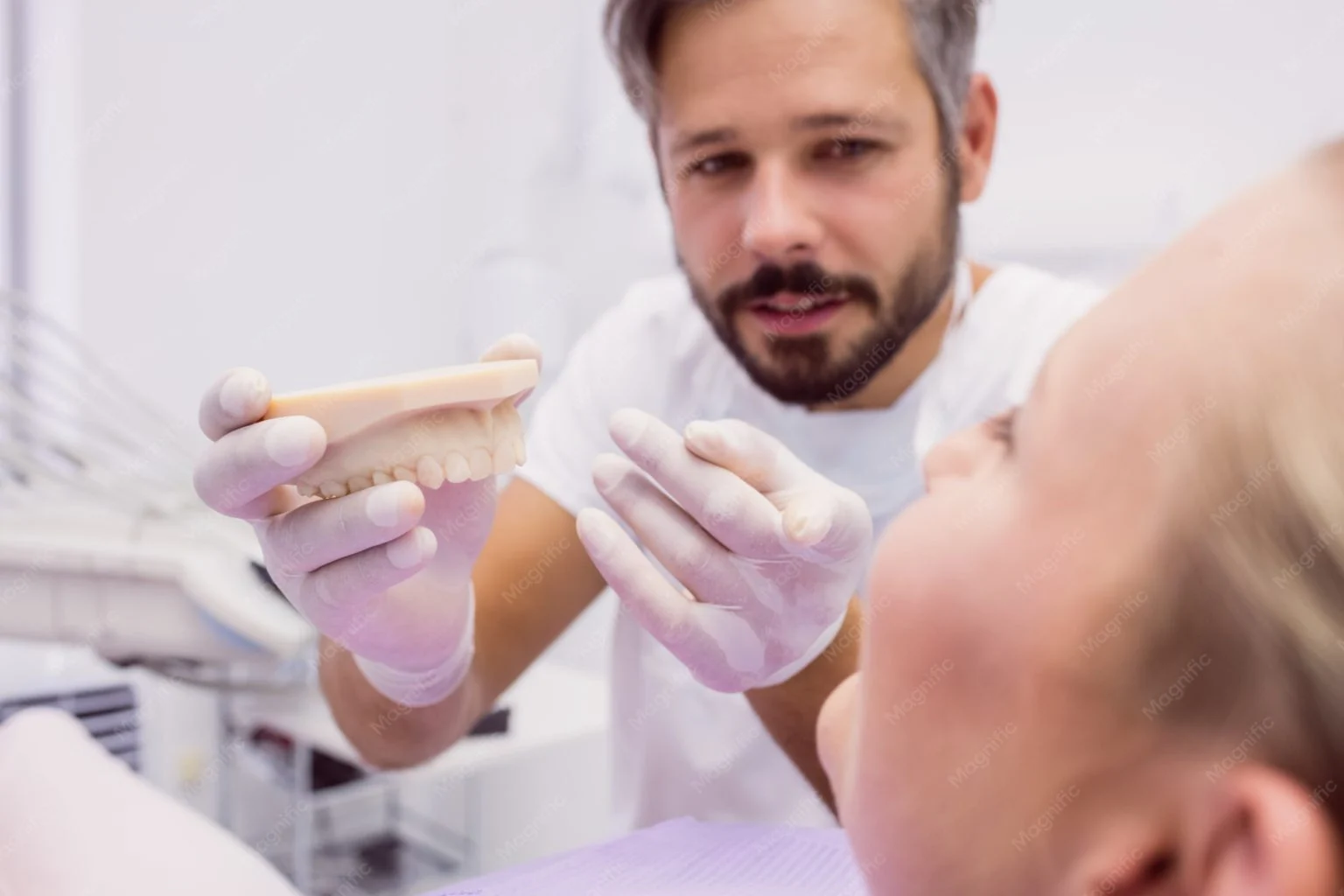
Candidacy for either option depends on your current oral health, bone volume, and any medical conditions that affect healing. A hands-on evaluation and appropriate dental imaging are needed to determine which option may fit your situation.
When Dentures May Be the More Appropriate Choice
Traditional dentures can be the more appropriate choice if you’re not ready for surgery, want a lower upfront cost, or are managing a health condition that needs to be stabilized first. Uncontrolled diabetes, for example, can affect healing after implant surgery, so your care team may recommend getting blood sugar under control before considering All-on-4.
Dr. Mouawia Ghiba at Ridge Road Family Dentistry can evaluate how removable dentures may fit your oral health, comfort, and tooth replacement needs. If implants are also being considered, the team can explain which options are available through the practice.
What an All-on-4 Implant Evaluation Considers
An All-on-4 evaluation looks closely at your bone density and bone volume, since implant placement depends on having enough healthy bone to support the implants. The angled back implants used in All-on-4 are designed to make efficient use of available bone, which means some patients who assume they don’t qualify turn out to be candidates after imaging.
In some cases, bone grafting may be recommended first to build up bone in areas that are too thin. Your evaluation will also cover your general health and healing capacity, since implant surgery involves sedation or anesthesia and a recovery period that dentures don’t require.
How Do Treatment Time, Care, and Costs Compare?
All-on-4 involves a longer treatment process. Some suitable patients may receive a temporary fixed restoration on the day of implant placement, but this depends on implant stability, bone condition, and the treatment plan.
From Immediate Dentures to a Temporary Fixed Bridge
Immediate dentures can often be placed the same day as extractions, giving you a complete smile while your gums heal, with impressions and fitting typically wrapped up within a matter of weeks.
All-on-4 takes longer overall: consultation and imaging, treatment planning, surgery day (which includes placing a temporary fixed bridge), several months of healing for osseointegration, then your final permanent restoration.
Long-Term Maintenance and Financing Considerations
Removable dentures need daily cleaning, soaking, and periodic adjustments as your jawbone changes shape, which adds appointments and cost over the years.
All-on-4 patients maintain their prosthesis more like natural teeth, brushing daily and using tools like a water flosser around the implants to keep gum tissue healthy, alongside regular oral hygiene checkups.
All-on-4 typically has a higher upfront cost. Coverage and payment arrangements vary, so review the practice’s insurance and payment information and contact the team for current details.
| Factor | All-on-4 | Traditional Dentures |
|---|---|---|
| Stability | Fixed, doesn’t shift | Can loosen or shift |
| Bone preservation | Helps maintain bone | Bone loss continues |
| Daily care | Brush in place | Remove and clean daily |
| Upfront cost | Higher | Lower |
| Treatment time | Several months (healing) | Weeks |
| Long-term upkeep | Regular checkups | Relines and replacements |
Choosing the Tooth Replacement That Fits Your Life
Choosing between traditional dentures and All-on-4 dental implants comes down to matching the treatment to your health, budget, and daily routine, not picking whichever option sounds more advanced. Both can restore your ability to eat, speak, and smile with confidence.
If a lower upfront cost and a less invasive process matter most to you, dentures remain a reasonable, time-tested choice. If you’re frustrated with slipping, clicking, or food restrictions, and you’re healthy enough for surgery, All-on-4 dental implants may offer the fixed stability you’re looking for.
Either path affects your oral health and quality of life for years, so it deserves a real conversation with your dental team, not just an internet search.
Frequently Asked Questions
Can I get All-on-4 implants if I have bone loss?
Many patients with some bone loss are still candidates for All-on-4, since the technique uses angled implants designed to make efficient use of the bone that remains. Dental imaging and a clinical evaluation can show whether you have enough bone to support implants or whether additional treatment may be needed first.
What are the main downsides of All-on-4 dental implants?
The biggest downsides are the higher upfront cost and the surgical process itself, which requires healing time and involves sedation or anesthesia. Recovery includes several months of osseointegration before your final restoration is placed, so it’s a longer overall timeline than traditional dentures.
Can I continue wearing dentures if I am not ready for implants?
Yes, traditional dentures remain a valid option for as long as you’re comfortable with them, and many people wear them for years without issue. They can also serve as a temporary or immediate solution while you decide whether All-on-4 is right for you down the road.
How long do traditional dentures and All-on-4 restorations last?
Traditional dentures often need relining, adjustment, or replacement over the years as your jawbone changes shape. All-on-4 is built as a long-term, fixed solution, and with proper maintenance and regular checkups, many patients keep their results for many years.
Are snap-in dentures a less expensive alternative to All-on-4?
Snap-in dentures, which attach to a smaller number of implants but still come out for cleaning, offer more stability than traditional dentures at a lower cost than All-on-4. They involve less chewing power and still require nightly removal.
Do All-on-4 implants hurt during or after surgery?
Surgery is performed under anesthesia or sedation, so you shouldn’t feel pain during the procedure. Afterward, mild swelling and soreness are common for the first week or two, and most patients manage it with prescribed or over-the-counter pain medication.